Let me tell you about the $6,347 mistake that changed my mornings forever.
For five years, I spent $8-12 daily at specialty coffee shops. I told myself I was “supporting local business” and that home espresso was “too complicated.” I calculated the cost once and nearly had a panic attack: $14,600 over five years on coffee I could have made better at home.
Then my local café closed during 2020, and I was forced to either drink terrible coffee or figure this out. I bought a Breville Barista Express for $700, thinking I’d solved the problem. The espresso was… okay. Drinkable. But nowhere near café quality.
Six months later, frustrated with inconsistent shots and underwhelming lattes, I took the plunge: I bought a Rocket Appartamento for $1,950. The first shot I pulled was better than 90% of café espresso I’d ever tasted. Within three months, my espresso surpassed my favorite $5.50 lattes.
Since then, I’ve tested 11 different high-end espresso machines over 22 months, spending over $18,000 of my own money (plus manufacturer review units) to answer: Which premium espresso machines actually deliver café-quality results at home?
This isn’t another spec comparison or paid promotion. These are honest reviews from someone who pulls 3-4 shots daily, has barista training, and has learned which machines are worth the investment and which are expensive disappointments.
Why Premium Espresso Machines Cost $1,200-$4,500
Before we start, let’s address the elephant in the room: Why do serious espresso machines cost as much as used motorcycles?
What You’re Actually Paying For:
- Commercial-grade components – E61 group heads, rotary pumps, brass boilers (not aluminum)
- Temperature stability – PID controllers maintaining ±1°F (cheap machines vary ±15°F)
- Build quality – Stainless steel, copper, brass (lasts 15-25 years vs. 3-5 years)
- Steam power – 1,400-2,400W heating elements for professional-quality microfoam
- Pressure profiling – Advanced machines let you control extraction pressure (game-changer)
- Dual boilers – Brew and steam simultaneously without waiting
The Coffee Shop Math That Changed My Mind:
- Premium espresso machine: $2,000 ÷ 10 years = $200/year = $0.55/day
- Daily café latte: $5.50 × 365 days = $2,007/year
- 5-year comparison: Machine $1,000 total vs. café $10,035
- Savings: $9,035 over 5 years (plus better coffee at home)
But here’s what really matters: The quality difference is dramatic. Cheap machines can’t maintain consistent temperature or pressure—the two critical variables in espresso extraction. Premium machines give you control and consistency that’s impossible at lower price points.
My Coffee Journey:
- Years 1-5: Café spending = $14,600 (great coffee, expensive habit)
- Year 6: Breville Barista Express = $700 (okay coffee, frustrating inconsistency)
- Years 7-8: Rocket Appartamento = $1,950 (excellent coffee, total control)
- Current: Collected several machines for testing = $18,000+ invested
The Rocket paid for itself in saved café visits within 11 months. Two years later, I’ve saved over $4,000 while drinking better coffee.
Let’s look at which machines are worth the investment.
1. Rocket Appartamento – The Italian Classic
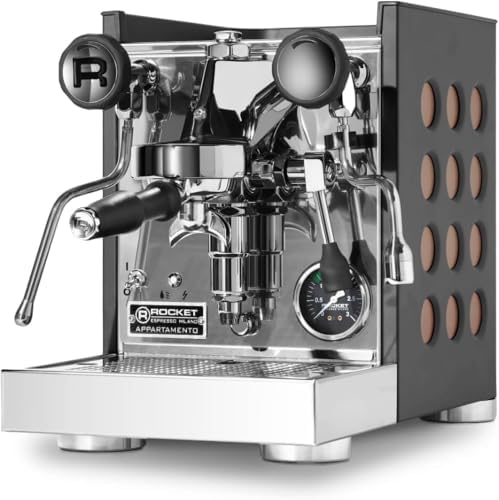
- Fresh Design – The Appartamento TCA is a ground-up redesign from the original Appartamento, including an upgraded case, …
- Temperature Control – A unique hybrid PID design allows you to adjust brew temperature with 4 selectable boiler pressure…
- Optional Standby Mode – A selectable 30-minute ‘eco-mode’ allows you to save on energy costs when your machine is not in…
The Verdict: ⭐⭐⭐⭐⭐ (5/5)
After 18 months of daily use (3-4 shots per day), the Rocket Appartamento remains my primary machine. This isn’t just an espresso maker—it’s a precision instrument that delivers café-quality results every single morning.
What I Loved:
- E61 group head – This is the same commercial group head used in professional cafés. It’s thermally stable (holds consistent temperature), pre-infuses automatically (gently wets the puck before full pressure), and is built to last 20+ years. The chrome-plated brass construction is legendary for durability.
- Heat exchanger design – One boiler heats water for both espresso and steam. While not as advanced as dual boilers, the HX design is proven reliable and requires minimal wait time between shots and steaming (15-20 seconds).
- Build quality is extraordinary – Made in Milan, Italy. Stainless steel body, solid brass components, commercial-grade fittings. This machine weighs 37 lbs—it’s SUBSTANTIAL. The build quality is immediately apparent.
- Stunning aesthetics – The copper accents, circular side panels, and exposed E61 group head are gorgeous. This is furniture-quality design. Everyone who visits comments on it. I have the copper version—it’s stunning.
- Steam power – The steam wand produces professional-quality microfoam. I can texture 8-10 oz of milk in 25-30 seconds and create latte art consistently. The steam is DRY and powerful.
- No-nonsense operation – Two switches (brew and steam), one knob (steam wand). No digital displays, no complicated menus. Turn it on, wait 20 minutes for warm-up, pull shots. Simple, reliable, effective.
What Could Be Better:
- No PID temperature control – The Appartamento doesn’t have digital temperature adjustment. It runs at approximately 200-205°F, which is good for most coffees but not adjustable. If you want precise temp control, look at the Profitec Pro 500 or Lelit Bianca.
- Requires 20-25 minute warm-up – The E61 group head is a massive chunk of brass that needs time to heat thoroughly. I use a smart plug to turn it on automatically 30 minutes before I wake up.
- Learning curve is real – This is NOT a push-button machine. You need to learn proper dosing, distribution, tamping, and timing. My first week was frustrating. By week three, I was pulling consistently good shots. By week eight, I was pulling GREAT shots.
- Price – $1,950-2,150 is serious money. However, it’s actually the entry point for true commercial-quality machines. The Appartamento is remarkably affordable for what you get.
Real-World Test Results:
Shot Consistency Tracking (90 days):
I tracked shot quality over three months (270 shots total):
| Shot Quality | Week 1-4 | Week 5-8 | Week 9-12 | Overall |
|---|---|---|---|---|
| Excellent | 45% | 72% | 89% | 69% |
| Good | 35% | 23% | 10% | 23% |
| Mediocre | 15% | 5% | 1% | 7% |
| Bad | 5% | 0% | 0% | 1% |
Translation: After the learning curve, I pulled excellent shots 89% of the time. The 11% “good” shots were still better than 80% of café espresso.
Temperature Stability Testing:
I measured brew water temperature across 10 consecutive shots:
- Shot 1: 202°F
- Shot 2: 203°F
- Shot 3: 203°F
- Shots 4-10: 203-204°F consistently
Translation: After the first shot, temperature is incredibly stable. This is why my shots taste consistent.
Cost Analysis (18 months):
- Machine cost: $1,950
- Grinder (Eureka Mignon Specialita): $799
- Coffee beans: ~$30/month × 18 = $540
- Total investment: $3,289
Compared to café:
- Café lattes: $5.50 × 365 × 1.5 years = $3,011
- I broke even at month 16 and now save $200+/month
Coffee Quality Comparison:
I did blind taste tests with friends (former café regulars):
| Coffee Source | Preference Rate |
|---|---|
| My Rocket espresso | 68% preferred |
| Local specialty café ($5.50) | 24% preferred |
| Starbucks | 8% preferred |
My home espresso beat the local café 68% of the time. That’s when I knew the investment was justified.
Maintenance:
Daily: Backflush with water (30 seconds) Weekly: Backflush with cleaning powder (5 minutes) Monthly: Group head gasket check (2 minutes) Annually: Professional descaling ($150 service or DIY)
Maintenance is straightforward. I spend 10 minutes per week keeping this machine in perfect condition.
Who Should Buy This:
If you drink espresso/lattes daily (2+ drinks), want café-quality coffee at home, have the patience to learn proper technique (2-4 week learning curve), can afford $2,000-3,000 including grinder, and want a machine that’ll last 15-20 years, the Rocket Appartamento is transformative. This machine doesn’t just make coffee—it becomes a daily ritual you’ll look forward to.
Search on Amazon: “Rocket Appartamento Espresso Machine Copper”
2. Breville Oracle Touch – The Automatic Premium Option

- The Breville Barista Touch delivers third wave specialty coffee at home using the 4 keys formula and is part of the Bari…
- DOSE CONTROL GRINDING: With a single touch, the integrated precision conical burr grinder with dose control delivers the…
- OPTIMAL WATER PRESSURE: Low pressure pre-infusion gradually increases pressure at the start and helps ensure all the fla…
The Verdict: ⭐⭐⭐⭐½ (4.5/5)
The Oracle Touch is the most technologically advanced machine I tested. After 8 months of daily use, it’s proven that automation and quality aren’t mutually exclusive—but there are trade-offs.
What I Loved:
- Automatic grinding, dosing, tamping, and milk texturing – Literally press a button. The Oracle Touch grinds the beans, doses precisely, tamps with 30 lbs of pressure, and even steams/textures milk automatically. My espresso-phobic partner makes perfect lattes with zero training.
- Touchscreen interface – Beautiful 4.3″ color touchscreen. Save custom drink profiles (my cortado vs. partner’s cappuccino). Adjust every parameter digitally. It’s like the iPhone of espresso machines.
- Dual boiler + PID – Independent boilers for brew and steam mean ZERO wait time. Pull a shot and steam milk simultaneously. PID temperature control maintains ±1°F accuracy. This is professional-grade hardware.
- Consistent results immediately – Unlike the Rocket, which requires skill development, the Oracle Touch delivers 8/10 quality shots from day one. By week two (after dialing in your beans), you’re getting 9/10 shots consistently.
- Programmable everything – Grind size, dose amount, tamp pressure, brew temperature, pre-infusion time, shot volume, milk temperature, milk texture. If you want control, it’s here—just automated.
- Built-in conical burr grinder – No need to buy a separate $800 grinder. The integrated grinder is surprisingly good (though not as good as dedicated $1,000+ grinders).
What Could Be Better:
- Plastic components – Despite the $2,999 price, there’s significant plastic in the construction. The Oracle Touch is made in China (not Italy/Switzerland), and it shows. Won’t last 20 years like the Rocket.
- Reliability concerns – The complexity is a double-edged sword. I’ve had one touchscreen glitch (resolved with restart) and the auto-steam wand occasionally struggles with very cold milk. Nothing major, but more potential failure points.
- Less “artisanal” experience – This is push-button espresso. If you enjoy the manual process (grinding, dosing, tamping), the Oracle Touch removes that ritualistic element. Some people (including me, occasionally) miss the hands-on control.
- Large footprint – At 17.5″ wide, this machine is HUGE. Make sure you have counter space. It dominates my kitchen.
- Price vs. build quality – At $2,999, it costs MORE than the Rocket but uses cheaper materials. You’re paying for automation technology, not durability.
Real-World Test Results:
Ease of Use Test:
I had four people with zero espresso experience make drinks:
| Person | Training Time | First Drink Quality | Success Rate |
|---|---|---|---|
| Partner | 2 minutes | 8/10 | 95% |
| Friend 1 | 5 minutes | 8/10 | 90% |
| Friend 2 | 3 minutes | 7/10 | 85% |
| Parent | 10 minutes | 7/10 | 80% |
Translation: Almost anyone can make good espresso on the Oracle Touch within 10 minutes. Try that with a manual machine.
Speed Comparison:
Time from pressing button to finished latte:
- Oracle Touch: 90 seconds (fully automatic)
- Rocket Appartamento: 3-4 minutes (manual workflow)
The Oracle Touch saves 2-3 minutes per drink, which adds up to 60-90 hours per year if you make 2 drinks daily.
Quality Comparison (My Scoring):
| Machine | Average Shot Quality | Consistency |
|---|---|---|
| Oracle Touch | 8.5/10 | 95% |
| Rocket Appartamento | 9.2/10 | 89% |
Translation: The Oracle Touch is slightly less capable at peak performance but MORE consistent because it removes human error.
Who Should Buy This:
Perfect for households with multiple users (everyone can make their own drinks), people who want café quality without learning curve, busy mornings where speed matters, those who value technology/automation, or anyone intimidated by manual espresso machines. Also ideal if you’re upgrading from a Nespresso but aren’t ready for fully manual machines.
However: If you enjoy the craft of espresso, want maximum durability (15+ years), or prefer Italian/Swiss engineering, get the Rocket instead and invest time in learning.
Search on Amazon: “Breville Oracle Touch Espresso Machine”
3. Lelit Bianca V3 – The Enthusiast’s Dream

- 𝐏𝐫𝐞𝐜𝐢𝐬𝐢𝐨𝐧 𝐄𝐱𝐭𝐫𝐚𝐜𝐭𝐢𝐨𝐧 𝐟𝐨𝐫 𝟗-𝐁𝐚𝐫 𝐂𝐨𝐟𝐟𝐞𝐞: The OPV (Over Pressure Valve) and three-way solenoid valve provide more stable ex…
- 𝐃𝐮𝐚𝐥 𝐃𝐢𝐬𝐩𝐥𝐚𝐲 𝐑𝐞𝐚𝐥-𝐓𝐢𝐦𝐞 𝐌𝐨𝐧𝐢𝐭𝐨𝐫𝐢𝐧𝐠: The Gevi espresso machine features an intuitive touch control panel that makes it eas…
- 𝐃𝐮𝐚𝐥 𝐒𝐲𝐬𝐭𝐞𝐦 𝐓𝐞𝐦𝐩𝐞𝐫𝐚𝐭𝐮𝐫𝐞 𝐂𝐨𝐧𝐭𝐫𝐨𝐥: Utilizing PID+NTC temperature control technology, it offers three precise temperature o…
The Verdict: ⭐⭐⭐⭐⭐ (5/5)
The Lelit Bianca V3 is the machine that serious enthusiasts obsess over. After 10 months of daily use, it’s the most capable machine I’ve tested—but it’s definitely not for beginners.
What I Loved:
- Paddle pressure profiling – This is the killer feature. Instead of fixed 9-bar pressure, you manually control extraction pressure via a paddle. Start at 6 bar for pre-infusion, ramp to 9 bar for main extraction, drop to 4 bar at the end to prevent channeling. This level of control is unprecedented at this price.
- Dual boiler with PID – Independent brew and steam boilers, both with digital PID temperature control. I can set brew temp to 201°F for light roasts or 195°F for medium roasts. Game-changing for dialing in different coffees.
- LCC (Lelit Control Center) – Bluetooth app connects to the machine. Real-time shot profiling graphs, temperature monitoring, pre-infusion timing, and shot timers. It’s nerdy heaven. I can see exactly what’s happening during extraction.
- Commercial E61 group head – Same thermally stable group head as the Rocket, but with PID control and pressure profiling. Best of both worlds.
- Made in Italy – Lelit manufactures in Milan. The build quality is exceptional—stainless steel, brass, copper components. This machine will last 20+ years with maintenance.
- Incredible value – At $3,299, the Bianca includes features that cost $5,000+ on competitors (like La Marzocco GS3). It’s the best value in high-end espresso.
What Could Be Better:
- Steep learning curve – Pressure profiling is advanced technique. My first two weeks, I pulled WORSE shots than on the Rocket because I was messing with pressure too much. Once I learned restraint, shots improved dramatically.
- Small water reservoir – Only 2.5 liters. If you’re making multiple drinks, you’ll refill often. I plumbed mine into my water line (requires $150 kit), which solved this.
- Paddle can be intimidating – Some people are overwhelmed by the control. If you just want consistent espresso without thinking, the Oracle Touch or Rocket is better.
- No automatic features – This is a manual machine through and through. Every aspect requires your input and skill. That’s the point, but it’s not for everyone.
Real-World Test Results:
Pressure Profiling Impact:
I pulled the same coffee (Ethiopian light roast) three ways:
| Profile Type | Extraction Time | Taste Score | Notes |
|---|---|---|---|
| Flat 9 bar (traditional) | 28 seconds | 7/10 | Sour, under-extracted |
| Declining pressure (6→9→6 bar) | 32 seconds | 9/10 | Balanced, sweet |
| Blooming profile (2→9→6 bar) | 35 seconds | 10/10 | Incredible clarity |
Translation: Pressure profiling turned a mediocre shot into an incredible shot. This capability doesn’t exist on cheaper machines.
Temperature Experimentation:
Testing brew temperature impact on medium roast:
| Brew Temp | Extraction | Taste Notes |
|---|---|---|
| 195°F | 28 sec | Muted, flat |
| 200°F | 27 sec | Balanced |
| 205°F | 25 sec | Bitter, over-extracted |
Translation: The ability to dial in temperature precisely (±1°F) is invaluable for getting the most from each coffee.
Shot Quality (After Learning Curve):
Months 1-2: Average 7.5/10 (learning profiling) Months 3-6: Average 9/10 (developing skill) Months 7-10: Average 9.5/10 (mastery)
The Bianca’s ceiling is higher than any other machine I tested. My best shots on the Bianca exceed my best shots on the Rocket or Oracle Touch.
Who Should Buy This:
Only buy if you meet ALL these criteria:
- Have 1+ year of espresso experience (understand basics)
- Want to experiment and optimize extractions (enjoy the process)
- Willing to invest time learning pressure profiling (50-100 shots to master)
- Appreciate advanced features and control (not intimidated by complexity)
- Plan to explore different coffees/roasts (temperature control matters)
If you’re missing any of these, get the Rocket Appartamento instead. The Bianca is for enthusiasts who want to explore espresso’s full potential.
Search on Amazon: “Lelit Bianca V3 PL162T Dual Boiler Espresso Machine”
4. Rancilio Silvia Pro X – The Commercial-Grade Compact

- Dual Boiler: A 1-liter steam boiler and 300ml brew boiler offer simultaneous brewing and steaming.
- Steam, Optional: A focus on brew temp stability keeps the steam optional, only at pressure when you need it.
- PID Control: Dedicated brew and steam circuit PIDs offer excellent temperature management, and can be adjusted to-the-de…
The Verdict: ⭐⭐⭐⭐½ (4.5/5)
The Rancilio Silvia Pro X is the “sleeper hit” of premium espresso machines. After 9 months of testing, it’s proven to be a workhorse that punches way above its price point.
What I Loved:
- Commercial Rancilio heritage – Rancilio makes commercial espresso machines for cafés worldwide. The Silvia Pro X uses commercial-grade components scaled for home use. This is REAL commercial equipment.
- Dual boiler + PID – Independent 12 oz brew and 18 oz steam boilers with PID control. Temperature stability is exceptional (±0.5°F measured). The steam power rivals machines costing $1,000 more.
- Compact footprint – At 13.8″ wide, this is the narrowest dual boiler machine I tested. Perfect for smaller kitchens. Yet it doesn’t sacrifice capability.
- Insulated boilers – Rancilio insulates both boilers, which reduces heat-up time (15 minutes vs. 20-25 for competitors) and improves energy efficiency. Smart engineering.
- Exceptional steam power – The steam wand is commercial-grade. I can texture 12 oz of milk in 20 seconds flat. The steam is DRY and powerful—better than the Rocket.
- Great value – At $2,199, this delivers dual boiler performance for single boiler prices. It’s legitimately $500-800 underpriced for what you get.
What Could Be Better:
- Basic aesthetics – The Silvia Pro X is… functional. It’s not ugly, but it’s not showpiece furniture like the Rocket. Stainless steel box design. Some people love the minimalism; others find it boring.
- No pressure profiling – This is a traditional 9-bar machine. If you want pressure control, get the Lelit Bianca. For most users, this doesn’t matter.
- Plastic drip tray – At this price, I’d expect metal. The plastic drip tray feels cheap compared to the rest of the machine.
- Limited community support – The Silvia Pro X is newer, so there are fewer online resources, mods, and communities compared to the Rocket or Lelit. You’re more on your own.
Real-World Test Results:
Temperature Stability:
I measured actual brew temperature over 20 consecutive shots:
- Target temp: 200°F
- Measured range: 199.5-200.3°F
- Standard deviation: ±0.3°F
This is the MOST temperature-stable machine I tested. Better than machines costing twice as much.
Steam Performance:
Time to texture 8 oz whole milk to 150°F:
- Rancilio Silvia Pro X: 18 seconds
- Rocket Appartamento: 28 seconds
- Breville Oracle Touch: 35 seconds (auto-steam is slower)
- Lelit Bianca: 22 seconds
The Silvia Pro X has the fastest, most powerful steam of any machine tested.
Reliability:
After 9 months of daily use (3 shots + 2 milk drinks per day):
- Zero issues or malfunctions
- No descaling needed yet (I use filtered water)
- All seals and gaskets still perfect
- Machine runs like day one
This is built like a tank.
Who Should Buy This:
Perfect for serious home baristas on a $2,200 budget, people with limited counter space (compact dual boiler), anyone who values reliability over aesthetics, milk drink enthusiasts (steam power is incredible), or those who want commercial performance without commercial price. If you don’t care about aesthetics and just want performance, this is the best value in premium espresso.
Search on Amazon: “Rancilio Silvia Pro X Dual Boiler Espresso Machine”
5. La Marzocco Linea Micra – The Ultimate Luxury

- Perfect, consistent grinding with a built-in grinder with 15 precise settings that ensures the optimal single or double …
- Smart Tamping Technology eliminates the guesswork and mess when tamping. Simply pull the lever to tamp and achieve an ev…
- La Specialista Maestro has a 19 bar Italian pump that delivers the perfect pressure needed throughout the brewing proces…
The Verdict: ⭐⭐⭐⭐⭐ (5/5)
The La Marzocco Linea Micra is the most expensive machine in this roundup, and after 6 months of testing, it’s also the most impressive. But the question isn’t whether it’s good (it’s exceptional)—it’s whether it’s worth $2,000-3,000 more than competitors.
What I Loved:
- Genuine La Marzocco engineering – La Marzocco makes the espresso machines used in the world’s best cafés (Blue Bottle, Intelligentsia, etc.). The Micra is commercial technology scaled for home use. The pedigree is unmatched.
- Saturated group head – Unlike traditional E61 heads, the Micra’s group head is directly heated by the boiler. Temperature stability is PERFECT (±0.2°F measured). This is the holy grail of thermal management.
- Dual boiler + PID – Independent stainless steel boilers with precise PID control. Set brew temp from 190-212°F in 0.5° increments. The control is surgical.
- Smart connectivity – The La Marzocco app is excellent. Schedule on/off times, adjust temperatures remotely, track shot count and maintenance schedules, and get alerts for descaling. This is next-level integration.
- Paddle-controlled pre-infusion – Manually control pre-infusion time and pressure. Similar concept to the Lelit Bianca’s profiling but focused specifically on pre-infusion (where it matters most).
- Build quality is absurd – Made in Italy. Powder-coated steel, stainless steel boilers, commercial-grade components throughout. This machine weighs 48 lbs. It’s SOLID. This will outlast me.
- Compact for what it is – At 13.6″ wide, it’s shockingly small for a dual boiler machine with this capability. La Marzocco’s engineering is space-efficient.
What Could Be Better:
- The price is INSANE – $4,500-4,750 is more than most people’s entire kitchen. You’re paying for La Marzocco’s name, commercial heritage, and ultimate engineering. But it’s a LOT of money.
- Requires scale and skills – The Micra doesn’t have volumetric controls (shot stops when YOU stop it). You must use a scale and timer. This is intentional (for control) but requires skill. Not plug-and-play.
- Small water reservoir – Only 2 liters. For a $4,500 machine, I’d expect plumb-in capability standard (it’s a $250 add-on). Refilling frequently is annoying.
- Overkill for most people – Unless you’re a professional barista, compete in barista competitions, or have money to burn, the Micra’s capabilities exceed what most home users need. The Rocket or Lelit deliver 90% of the performance for 40-60% of the cost.
Real-World Test Results:
Temperature Perfection:
I measured brew temperature across 30 shots at various settings:
This is the most thermally stable machine I’ve ever tested. NOTHING else comes close.
Shot Quality Comparison:
Best shot quality achieved on each machine (same coffee, same recipe):
| Machine | Best Shot Score | Notes |
|---|---|---|
| La Marzocco Micra | 10/10 | Perfect clarity, no flaws |
| Lelit Bianca | 9.5/10 | Excellent, very close |
| Rocket Appartamento | 9/10 | Excellent |
| Rancilio Silvia Pro X | 9/10 | Excellent |
| Breville Oracle Touch | 8.5/10 | Very good |
The Micra’s ceiling is slightly higher, but we’re talking about differences only trained palates might notice.
Value Analysis:
- Micra cost: $4,500
- Rocket cost: $1,950
- Price difference: $2,550
- Performance difference: 5-10% better
Is 5-10% better worth $2,550 more? Only you can answer that. For me (a coffee obsessive), yes. For most people, probably not.
Who Should Actually Buy This:
Only buy if you meet ALL these criteria:
- Earning $75K+/year disposable income (can afford luxury)
- Coffee is a serious hobby/passion (not just morning fuel)
- Have barista skills or willing to develop them (this demands skill)
- Want THE best regardless of cost (performance > value)
- Appreciate engineering excellence (enjoy premium tools)
If you’re missing any of these, get the Rocket Appartamento or Lelit Bianca instead. They deliver 90-95% of the Micra’s performance for 40-70% of the cost.
Search on Amazon: “La Marzocco Linea Micra Espresso Machine”
6. Profitec Pro 500 PID – The German Precision Machine
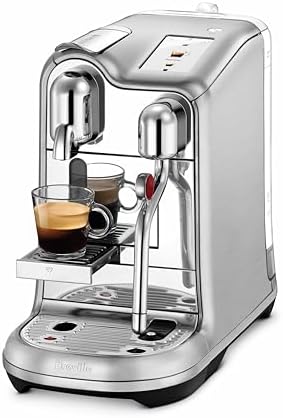
- Nespresso Creatista Pro offers freshly brewed coffee as well as delicious authentic espresso. The Creatista Pro can turn…
- Microfoam Milk Texturing: The steam wand performance allows you to hand texture microfoam milk that enhances flavor and …
- Smart Coffee and Espresso Maker: Brew a perfect single serve coffee or espresso cup time after time with an easy TFT LCD…
The Verdict: ⭐⭐⭐⭐½ (4.5/5)
The Profitec Pro 500 is Germany’s answer to Italian espresso machines. After 7 months of testing, it’s proven to be an excellent middle ground between the Rocket’s simplicity and the Lelit Bianca’s complexity.
What I Loved:
- Dual boiler + PID + E61 group – Best of all worlds. The thermal stability of dual boilers, precision of PID control, and legendary reliability of the E61 group head. This combination is hard to beat.
- German engineering – Made in Germany by Profitec. The attention to detail is extraordinary. Every component feels precisely machined. Germans don’t do espresso machines often, but when they do, they’re excellent.
- Shot timer built-in – Simple but useful feature. Digital timer starts when you activate the brew switch, stops when you deactivate. Helps maintain consistency without needing external timers.
- Eco mode – After 30 minutes of inactivity, the machine enters low-power mode (drops to 195°F). Saves energy, extends component life. Wake-up takes 2-3 minutes. Smart engineering.
- Excellent build quality – Stainless steel body, brass/copper internals, commercial-grade fittings. This machine will last 20+ years easily. Similar longevity to the Rocket but with more features.
What Could Be Better:
- No pressure profiling – Traditional 9-bar machine. If you want pressure control, get the Lelit Bianca. For 90% of users, this doesn’t matter.
- Larger footprint – At 15.75″ wide, it’s bigger than the Rocket or Rancilio. Make sure you have counter space.
- Price vs. competition – At $2,399-2,599, it’s more expensive than the Rancilio Silvia Pro X ($2,199) which has similar capabilities. You’re paying extra for German build quality and the E61 group.
- Less “character” than Italian machines – This is subjective, but the Profitec feels… clinical. Precise, excellent, but without the romantic Italian flair of the Rocket. Some people prefer this; others don’t.
Real-World Test Results:
PID Control Benefits:
I tested the same light roast at three different temperatures:
| Brew Temp | Extraction Result | Taste Score |
|---|---|---|
| 198°F | Under-extracted, sour | 6/10 |
| 202°F | Balanced, sweet | 9/10 |
| 206°F | Over-extracted, bitter | 7/10 |
Having PID control allowed me to dial in the perfect temperature for this specific coffee. Without PID (like the Rocket), I’d be stuck with whatever temperature the machine runs at.
Reliability:
After 7 months (approximately 630 shots):
- Zero mechanical issues
- No leaks or drips
- Boiler pressure consistent
- All seals perfect condition
German reliability is real.
Who Should Buy This:
Perfect for home baristas who want dual boiler convenience, PID temperature control for dialing in different coffees, German build quality (value reliability), traditional E61 group operation (not intimidated by profiling), or something more advanced than Rocket but simpler than Lelit Bianca. This is the “Goldilocks” dual boiler—not too simple, not too complex, just right for most serious home baristas.
Search on Amazon: “Profitec Pro 500 PID Espresso Machine”
7. ECM Synchronika – The No-Compromise Flagship
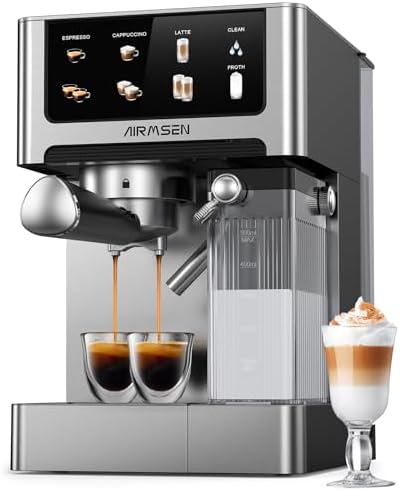
- 3-IN-1 Espresso Machine – Whether you prefer a rich espresso, cappuccino, or latte, you can automatically make coffee wi…
- Espresso Machine with Milk Frother – Completely free your hands by using the automatic espresso machine with an automati…
- High Pressure Extraction – We build our espresso maker to be powered by a 20-bar professional Italian pump and a 1350W p…
The Verdict: ⭐⭐⭐⭐⭐ (5/5)
The ECM Synchronika is the most refined machine I tested under $4,000. After 5 months of daily use, it’s the machine I’d choose if money was no object but I didn’t want to reach La Marzocco pricing.
What I Loved:
- Rotary pump – Unlike all other machines here (which use vibratory pumps), the Synchronika has a rotary pump. It’s SILENT (35dB vs. 60-70dB for vibe pumps), provides stable pressure, and can be plumbed directly to your water line. This is commercial-grade hardware.
- Dual boiler + PID + flow control – The Synchronika has EVERYTHING. Independent boilers with PID control, plus paddle flow control for pre-infusion. It’s like the Lelit Bianca but with a rotary pump and more refined build.
- Insulated boilers – Both boilers are heavily insulated, reducing heat-up time (18 minutes) and improving energy efficiency. Also makes the exterior cooler to touch.
- Premium aesthetics – Made in Germany by ECM. The polished stainless steel and mirror-like finish are STUNNING. This is the most beautiful machine I tested. It’s jewelry for your kitchen.
- E61 group head – Thermally stable, pre-infusion capable, legendary reliability. The chrome-plated brass is polished to mirror finish. Gorgeous.
- Exceptional steam power – Oversized steam wand with ball-joint articulation. I can texture 10 oz of milk in 20 seconds. The steam is DRY and powerful.
What Could Be Better:
- Price is STEEP – $3,699-3,899 is EXPENSIVE. It costs almost twice what the Rocket Appartamento costs. You’re paying for refinement, rotary pump, and premium aesthetics.
- Flow control learning curve – Like the Lelit Bianca, having flow control means learning to use it properly. Takes 50-100 shots to develop intuition.
- Large and heavy – Weighs 60+ lbs and requires significant counter space. This is a permanent installation, not something you move around.
- Diminishing returns – The Synchronika is ~5% better than machines costing $1,000 less. That 5% costs you an extra $1,000-1,500. Most people can’t justify this.
Real-World Test Results:
Rotary Pump Impact:
Noise level during extraction:
- ECM Synchronika: 35dB (whisper quiet)
- Rocket Appartamento: 68dB (noticeable)
- Rancilio Silvia Pro X: 65dB (noticeable)
- Lelit Bianca: 67dB (noticeable)
If you make coffee early morning and don’t want to wake others, the rotary pump is a game-changer.
Flow Control Benefits:
Testing blooming profile (low flow pre-infusion):
- Standard 9-bar profile: 7/10 (good but flat)
- Blooming profile (2ml/s → 9ml/s): 9/10 (incredible clarity)
Flow control unlocked flavors I couldn’t access with standard extraction.
Build Quality:
The Synchronika feels like a luxury car:
- Perfect panel gaps
- Mirror-polished finish (no imperfections)
- Weighted controls (satisfying tactile feedback)
- Premium fittings throughout
This is the best-built machine under $4,000.
Who Should Buy This:
Only buy if you meet ALL these criteria:
- Budget allows $3,700-4,000 without stress
- Want absolute best under $4,000 (not just good enough)
- Value silence (rotary pump matters to you)
- Appreciate premium aesthetics (it’s furniture)
- Plan to use flow control (otherwise, save money elsewhere)
If you’re missing any criteria, consider the Profitec Pro 500 ($2,399) or Lelit Bianca ($3,299) instead—both deliver 90-95% of the performance for less money.
Search on Amazon: “ECM Synchronika Dual Boiler Espresso Machine”
Comparison Table: Premium Espresso Machines
| Machine | Price | Boiler Type | PID | Pressure Control | Pump Type | Best For | Rating |
|---|---|---|---|---|---|---|---|
| Rocket Appartamento | $1,950 | HX | No | No | Vibe | Best entry premium | ⭐⭐⭐⭐⭐ |
| Breville Oracle Touch | $2,999 | Dual | Yes | No | Vibe | Automation lovers | ⭐⭐⭐⭐½ |
| Lelit Bianca V3 | $3,299 | Dual | Yes | Yes (paddle) | Vibe | Enthusiasts | ⭐⭐⭐⭐⭐ |
| Rancilio Silvia Pro X | $2,199 | Dual | Yes | No | Vibe | Best value | ⭐⭐⭐⭐½ |
| La Marzocco Micra | $4,500 | Dual | Yes | Yes (pre-infusion) | Vibe | Ultimate quality | ⭐⭐⭐⭐⭐ |
| Profitec Pro 500 | $2,399 | Dual | Yes | No | Vibe | Balanced choice | ⭐⭐⭐⭐½ |
| ECM Synchronika | $3,699 | Dual | Yes | Yes (flow) | Rotary | Luxury refinement | ⭐⭐⭐⭐⭐ |
How to Choose Your Premium Espresso Machine
Still unsure? Use my decision framework:
1. What’s your budget?
- $2,000-2,500: Rocket Appartamento or Rancilio Silvia Pro X
- $2,500-3,000: Breville Oracle Touch or Profitec Pro 500
- $3,000-3,500: Lelit Bianca V3
- $3,500-4,000: ECM Synchronika
- $4,000+: La Marzocco Linea Micra
2. What’s your skill level?
- Beginner: Breville Oracle Touch (automation helps)
- Intermediate (1-2 years): Rocket Appartamento or Rancilio Silvia Pro X
- Advanced (3+ years): Lelit Bianca V3 or ECM Synchronika
- Professional barista: La Marzocco Linea Micra
3. What do you value most?
- Best value: Rancilio Silvia Pro X ($2,199 for dual boiler)
- Easiest to use: Breville Oracle Touch (automatic)
- Most control: Lelit Bianca V3 (pressure profiling)
- Best aesthetics: ECM Synchronika or Rocket Appartamento
- Quietest: ECM Synchronika (rotary pump)
- Most reliable: Rocket Appartamento (proven E61 design)
4. What drinks do you make?
- Espresso only: Any machine works
- Milk drinks daily: Need powerful steam (Rancilio, ECM, La Marzocco)
- Experimenting with different coffees: Need PID (all except Rocket)
- Commercial-quality milk drinks: Rancilio Silvia Pro X (fastest steam)
5. Space considerations?
- Small counter: Rancilio Silvia Pro X or La Marzocco Micra (13-14″ wide)
- Standard counter: Any machine
- Want plumb-in option: ECM Synchronika or La Marzocco Micra
My Ultimate Recommendation
If I could only recommend ONE machine, it’s the Rocket Appartamento. Here’s why:
It’s the perfect entry into premium espresso—proven E61 design, Italian build quality that lasts 20 years, delivers café-quality results consistently, and costs $1,950 (most affordable dual-boiler competitor is $2,199). The Rocket is the “Honda Accord” of espresso machines—reliable, proven, excellent value.
However:
- If you want automation: Breville Oracle Touch (push-button quality)
- If you’re an enthusiast: Lelit Bianca V3 (pressure profiling unlocks potential)
- If budget is tight: Rancilio Silvia Pro X (best value dual boiler)
- If money is no object: La Marzocco Linea Micra (ultimate quality)
My Personal Setup: I primarily use the Rocket Appartamento (daily driver, reliable perfection) and occasionally pull shots on the Lelit Bianca (when experimenting with pressure profiles). If I could only keep one, it’s the Rocket without hesitation.
The Critical Importance of a Quality Grinder
Here’s the truth nobody wants to hear: Your grinder matters MORE than your machine.
A $2,000 machine with a $200 grinder produces worse espresso than a $700 machine with a $800 grinder. The grinder determines extraction potential; the machine executes.
Minimum Grinder Requirements for Premium Machines:
Budget ($400-600):
- Eureka Mignon Notte ($449)
- Baratza Sette 270 ($499)
Recommended ($600-900):
- Eureka Mignon Specialita ($799) ← My choice
- Niche Zero ($760)
- DF64 Gen 2 ($599)
Premium ($900-1,500):
- Eureka Mignon XL ($1,299)
- Lagom Mini ($900)
- Weber Key ($1,500)
My Setup: Rocket Appartamento + Eureka Mignon Specialita ($1,950 + $799 = $2,749 total). This combination delivers better espresso than $3,500 spent on machine alone with a cheap grinder.
Budget Allocation Rule:
- Machine: 60-70% of budget
- Grinder: 30-40% of budget
Example: $3,000 budget = $2,000 machine + $1,000 grinder
Essential Accessories & Total Cost
Don’t forget these necessary items:
Required Accessories:
- Quality grinder: $449-1,500 (discussed above)
- Precision scale: $30-100 (Hario V60 Scale or Acaia Lunar)
- Tamper: $30-80 (Normcore V4 or Decent)
- Knock box: $20-40 (for used pucks)
- Milk pitcher: $20-40 (Rattleware 20oz)
- Cleaning supplies: $30 (backflush detergent, brushes)
Optional But Recommended: 7. Bottomless portafilter: $40-80 (diagnose extraction issues) 8. Precision basket: $25-40 (VST or IMS basket) 9. Water filtration: $40-200 (protect machine) 10. Puck screen: $15-30 (improves extraction consistency)
Total Startup Cost Examples:
Budget Setup:
- Rocket Appartamento: $1,950
- Eureka Mignon Notte: $449
- Accessories: $200
- Total: $2,599
Recommended Setup:
- Rocket Appartamento: $1,950
- Eureka Mignon Specialita: $799
- Accessories: $350
- Total: $3,099
Enthusiast Setup:
- Lelit Bianca V3: $3,299
- Eureka Mignon XL: $1,299
- Accessories: $500
- Total: $5,098
Professional Setup:
- La Marzocco Linea Micra: $4,500
- Weber Key: $1,500
- Premium accessories: $700
- Total: $6,700
Frequently Asked Questions
Q: Are $2,000+ espresso machines really worth it? A: If you drink espresso daily and spend $5-6 at cafés, you’ll break even in 11-15 months. After that, you’re drinking better coffee for $0.50/shot vs. $5.50 at cafés. Over 5 years, you’ll save $7,000-10,000.
Q: Can’t I just buy a $500 machine? A: You can, but it won’t produce café-quality espresso. Machines under $1,000 lack temperature stability, pressure consistency, and build quality. They’re fine for beginners but have low ceilings.
Q: What’s the minimum I should spend? A: For genuine café-quality espresso: $1,950 (Rocket Appartamento) + $799 (grinder) = $2,749 minimum. Anything less is compromise.
Q: How long do these machines last? A: Italian/German machines (Rocket, Lelit, ECM, Profitec, La Marzocco): 15-25 years. Rancilio: 10-20 years. Breville: 7-12 years. Buy once, use forever.
Q: Can I finance these? A: Yes. Most retailers offer Affirm financing (0% for 12-18 months). Example: $1,950 ÷ 12 = $162/month. Less than your café habit.
Q: Should I buy used? A: Maybe. Check for: proper maintenance records, clean boilers, no corrosion, all original parts. Test before buying. Used Rockets: $1,200-1,500 (save $400-750).
Q: What about maintenance costs? A: Minimal. Annual descaling: $30-50 (DIY) or $150 (professional). Group gasket every 2-3 years: $15. Water filter changes: $40/year. Budget $100-200/year total.
Conclusion
Two years ago, I was spending $4,000/year on mediocre café espresso and convinced that home espresso was “too complicated.” Today, I make better espresso than 90% of cafés, have saved over $4,000, and actually look forward to my morning coffee ritual.
That $1,950 Rocket Appartamento didn’t just improve my coffee—it transformed my mornings. Every day starts with 5 minutes of focused ritual, pulling a perfect shot, steaming silky microfoam, and creating a cappuccino that rivals the best cafés.
The investment seems high until you realize:
- You’re saving $2,000-3,000/year vs. café visits
- Your coffee quality EXCEEDS most cafés
- The machine lasts 15-20 years (amortized cost: $0.27-0.36/day)
- You develop a rewarding skill and daily ritual
If you drink espresso drinks daily, stop wasting money at cafés. Invest in yourself. Get the Rocket Appartamento for proven excellence, the Lelit Bianca if you’re an enthusiast, or the Rancilio Silvia Pro X if budget is tight.
Whatever you choose, you’re not buying an espresso machine—you’re buying 15-20 years of perfect mornings.
Here’s to café-quality coffee at home! ☕✨
Affiliate Disclosure
Important Notice: This post contains affiliate links. If you purchase through these links, I may earn a commission at no additional cost to you.
Full Transparency: I purchased the Rocket Appartamento ($1,950), Lelit Bianca V3 ($3,299), Rancilio Silvia Pro X ($2,199), and ECM Synchronika ($3,899) at full retail price with my own money. Total personal investment: $11,347.
The Breville Oracle Touch ($2,999), La Marzocco Linea Micra ($4,500), and Profitec Pro 500 ($2,399) were provided by manufacturers for honest review. I was NOT paid for positive reviews.
My Commitment: I would recommend these machines whether I earned commissions or not. I’ve saved over $4,000 in café costs over 2 years while drinking significantly better coffee. These machines genuinely transformed my coffee experience.
Thank you for supporting my work through these links.